Congratulations Oakview Farm in Kingsport

Oakview Farm is FarmWork’s 6th Loan Recipient! See Loan Recipients here

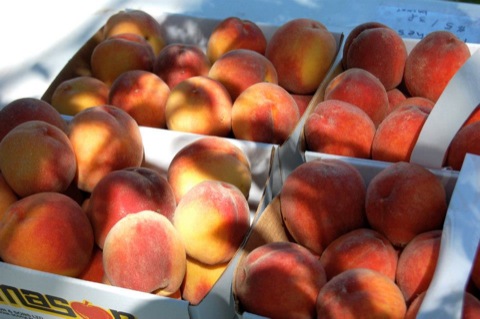
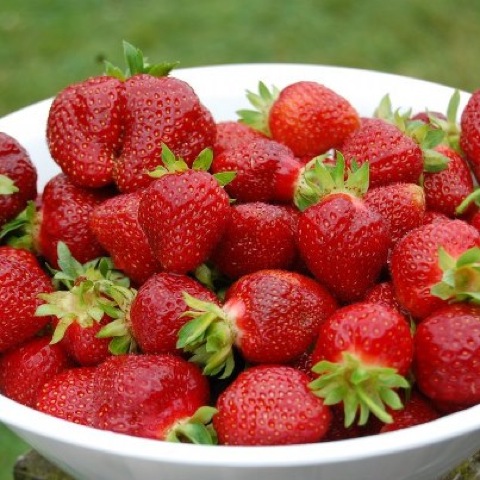
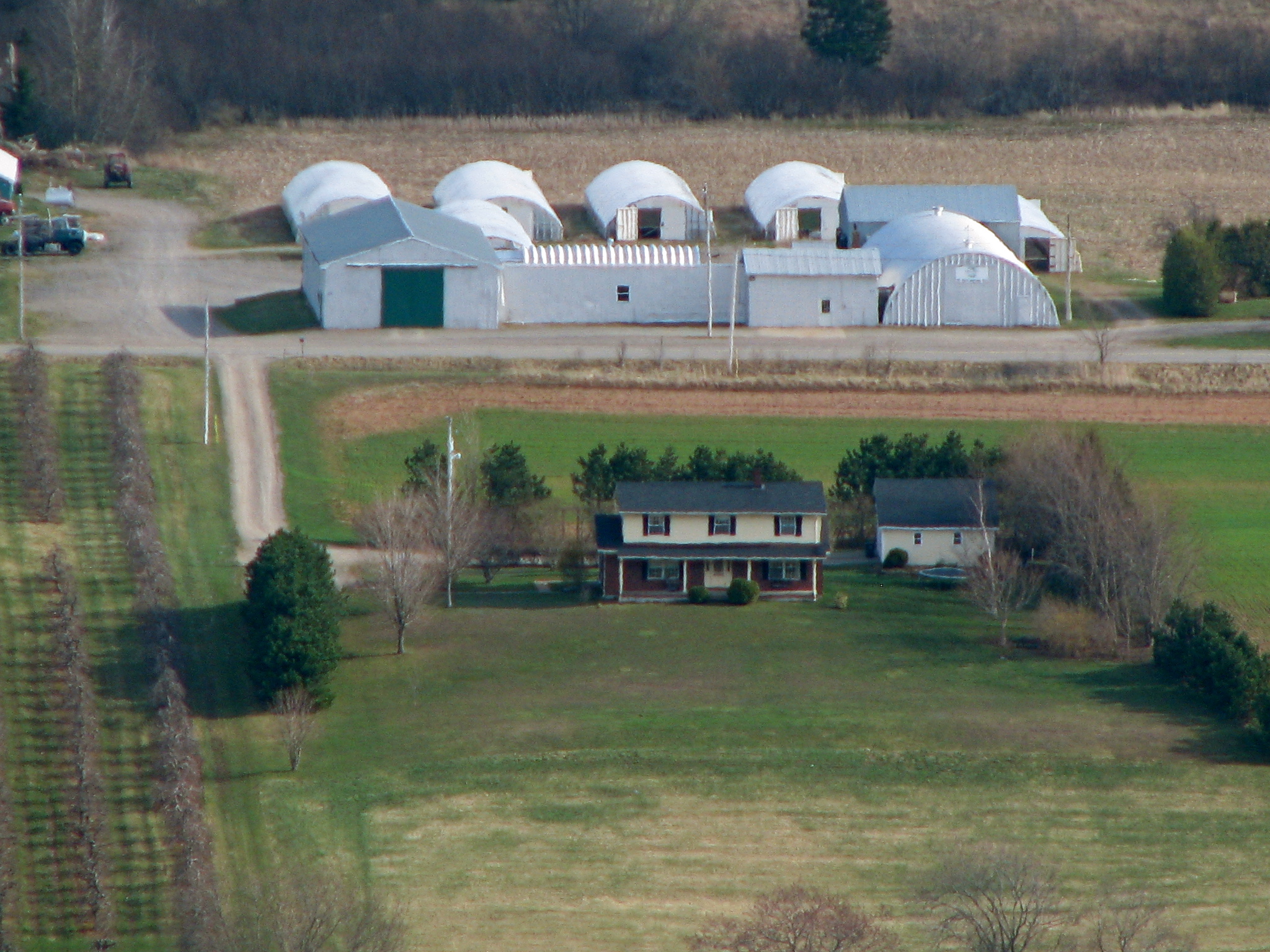
Oakview Farm is a small local producer of pesticide free produce. They have three market areas; an on farm U pick operation for fresh fruit/vegetables, free run egg, and direct market sales at the Halifax Seaport Market. They have been in business for 16 years and have consistently grown their sales over that period of time.

They have direct contact with their customers and enjoy providing fine quality produce for their business partners. Recently, they have added a greenhouse to extend their growing season for salad crops and flowers. They are also expanding their current operations to include a facility for on farm processing/ packing of fruit and vegetables as well as cold storage.

Keep up to date with Oakview: https://www.facebook.com/OakviewFarmAndGreenhouse

Pam Warhurst: How we can eat our landscapes

What should a community do with its unused land? Plant food, of course. With energy and humor, Pam Warhurst tells at the TED Salon the story of how she and a growing team of volunteers came together to turn plots of unused land into communal vegetable gardens, and to change the narrative of food in their community.

Pam Warhurst cofounded Incredible Edible, an initiative in Todmorden, England dedicated to growing food locally by planting on unused land throughout the community. Full bio »

Getting Your Food to More Tables

– BRIDGING GAPS BETWEEN PRODUCERS AND CONSUMERS 

websites – social media – connections – food hubs – distribution

If you grow, process, distribute, or eat food you’re invited to attend!

Wolfville Farmers’ Market , Thursday, October 25th, 6 pm

Contribution $5 – includes tea, coffee, juice, cookies

 Innovative food-related businesses and organizations continually seek to engage existing and new customers. The Web can bridge gaps and facilitate online connections and physical distribution.

FarmWorks is hosting this information and networking session to share ideas and strategies that will enable more effective connections between producers and consumers. FarmWorks encourages collaborations that benefit food producers and consumers.

Chair: Dr. Edith Callaghan, Acadia Business and Business Strategy.

Facilitators and Presenters: FarmWorks Media Advisor Duncan Ebata;

Blue Cow Creative Innovator & Social Media Manager Shaun Whynacht;

Acadia Business and Marketing Professor Dr. Donna Sears

Program:

6:00 pm – Refreshments and Conversations

6:30 pm – Welcome, Chair and Introductions, Linda Best – FarmWorks

6:45 pm – Presentations: Duncan, Sean, Donna

7:30 pm – Discussion Break

7:45 pm – Open Forum questions:

o  Are you getting your food to enough tables?

o  What is working well and what is not?

o  How can or does your website help?

o  How can or does social media help?

o  Can FarmWorks help increase connections, communication and collaborations between farms, food producers, distributors, consumers, restaurants, food security organizations and other participants in the food system?

o  Should there be a website / portal that will direct people to every part of the local food system – from field to fork and perhaps all the steps in between?  http://www.terroiretsaveurs.com/en/restaurants/, http://www.justfood.ca/buylocal/, http://www.localharvest.org/,  www.selectns.ca,

8:45 pm – Summary and next steps, Chair

“Gentle Dragons” are looking for Food Entrepreneurs

The Blockhouse School, November 9th, 12 pm
Masonic Hall, Baddeck, November 14
th, 6 pm
Wolfville Farmers’ Market, November 17th, 6 pm

        EVERYONE INTERESTED IN SUPPORTING LOCAL FARMS AND FOOD PRODUCERS IS INVITED TO ATTEND

Coffee, Tea, Juice, Local Cookies Provided

$5 Contribution Welcome

Money invested in the FarmWorks Community Economic Development Fund provides loans to farms and food-related businesses to help increase the supply of local food, and agricultural and related economic activity. Showcase Events are not funded by shareholder investments.

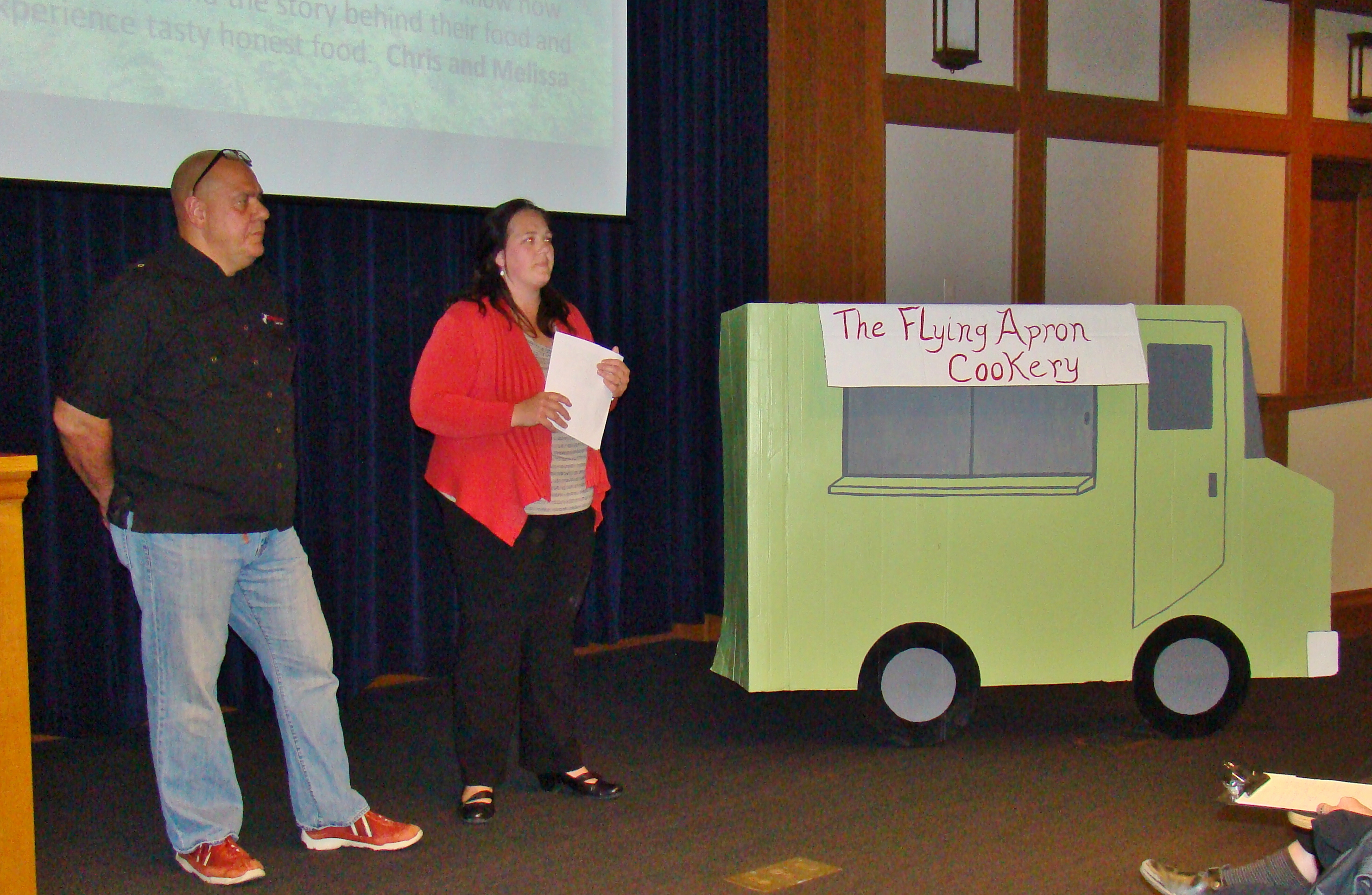
Local Food Entrepreneurs will present their plans for increasing sustainable production. The “Gentle Dragons” and the Audience will ask questions and make suggestions

Entrepreneurs planning to produce more food in NS – we’d like to hear from you! Applications to present at the Showcase are invited from Nova Scotian entrepreneurs who may be seeking loans in order to increase sustainable production of food. Each entrepreneur will have five minutes and, if desired, up to 10 slides to tell their stories, followed by Q&A and comments from the “Gentle Dragons” and the audience. Entrepreneurs are encouraged to promote their businesses at the event as this is an excellent opportunity to raise awareness of your business and products and to build relationships with potential investors, the public and other entrepreneurs.
D
ownload the loan application from the FarmWorks.ca website https://sandbox.farmworks.ca/about/lending/ or contact lbest@ns.sympatico.ca. Please submit to lbest@ns.sympatico.ca by Friday, October 26th.

Slow Money: “We must learn to invest as if food, farms and fertility mattered. We must connect investors to the places where they live, creating vital relationships and new sources of capital for small food enterprises.”

FarmWorks mission is to promote and provide strategic and responsible community investment in food production and distribution in order to increase access to a sustainable local food supply for all Nova Scotians. FarmWorks Directors and Advisors will provide a minimum of two hours assistance to qualifying presenters seeking loans from FarmWorks.


Pies Most Pleasing

Eating In: Pies most pleasing

By Valerie Mansour Winter 2010

There’s nothing like the aroma of a savoury pie wafting from your oven. Whether it’s beef, chicken or vegetable, a two-crust pie or a one-crust quiche, a savoury pie can take away the chill from the coldest winter day.

These pies also connect with people on a sentimental level. “Whose mother, grandmother or father didn’t make chicken pot pie?” asks Heather Lunan, who sells pies at the Farmers’ Market in Wolfville, Nova Scotia. “A lot of Brits come by and they’re so excited to see meat pies around here.”

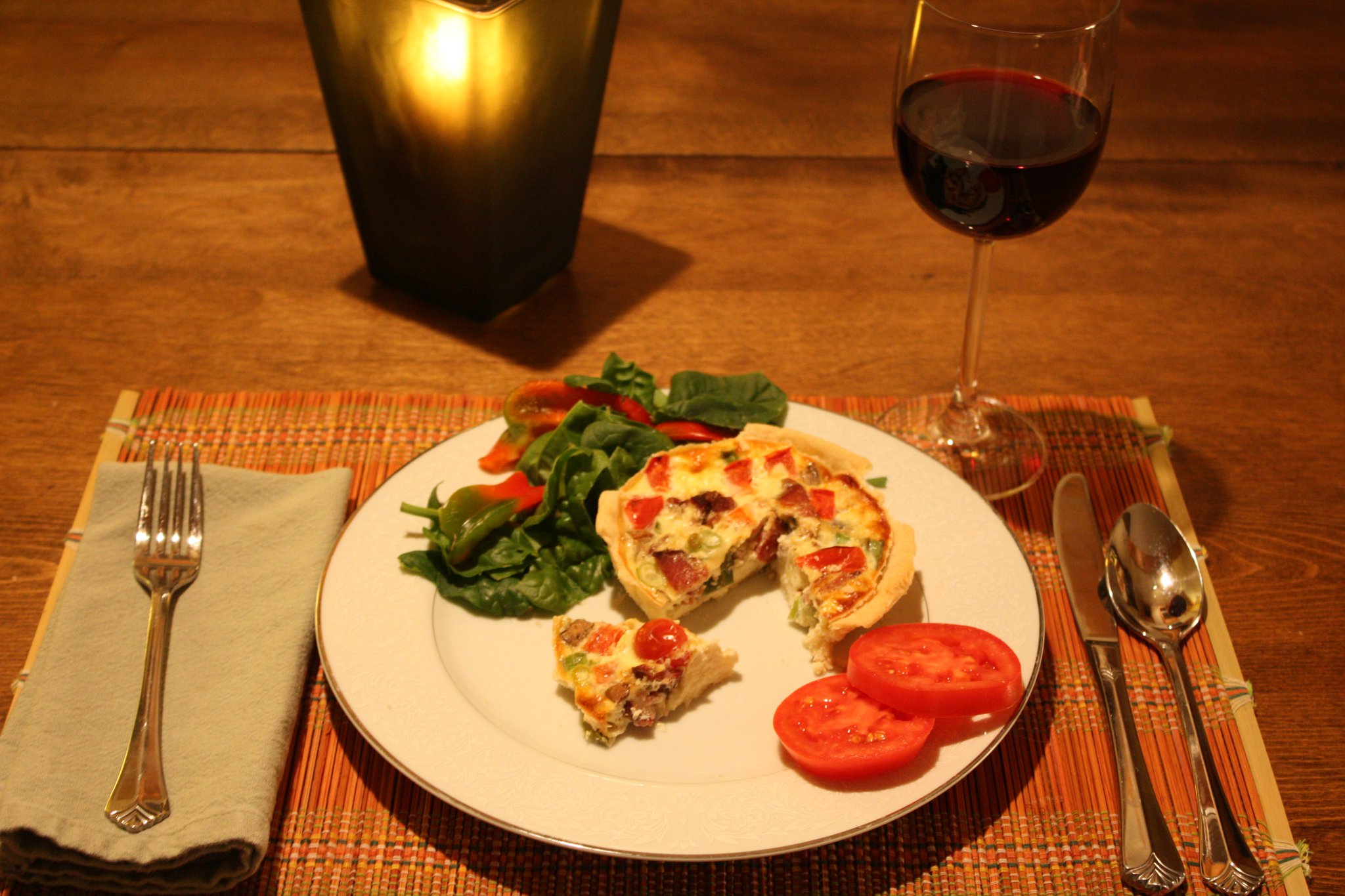
Popular among the delicious offerings she and her husband make for their business, Pie R Squared, are a Harvest Quiche with  autumn vegetables, including zucchini and peppers. They don’t pre-cook the vegetables, resulting in a quiche with a crunch. Their DeWolf Beef and Ale pie has a distinct porter flavour that resonates with beer fans. They also create unusual combinations such as a Chipotle, Leek and Tofu quiche with a smoky, hot flavour rounded out with hints of cheddar.

Lunan says pot pies are convenient for people who don’t have time to cook, especially students.  While people may prefer quiches in the spring and summer, they desire potpies when the weather turns cooler. “That makes sense because they’re so comforting to eat,” she notes.

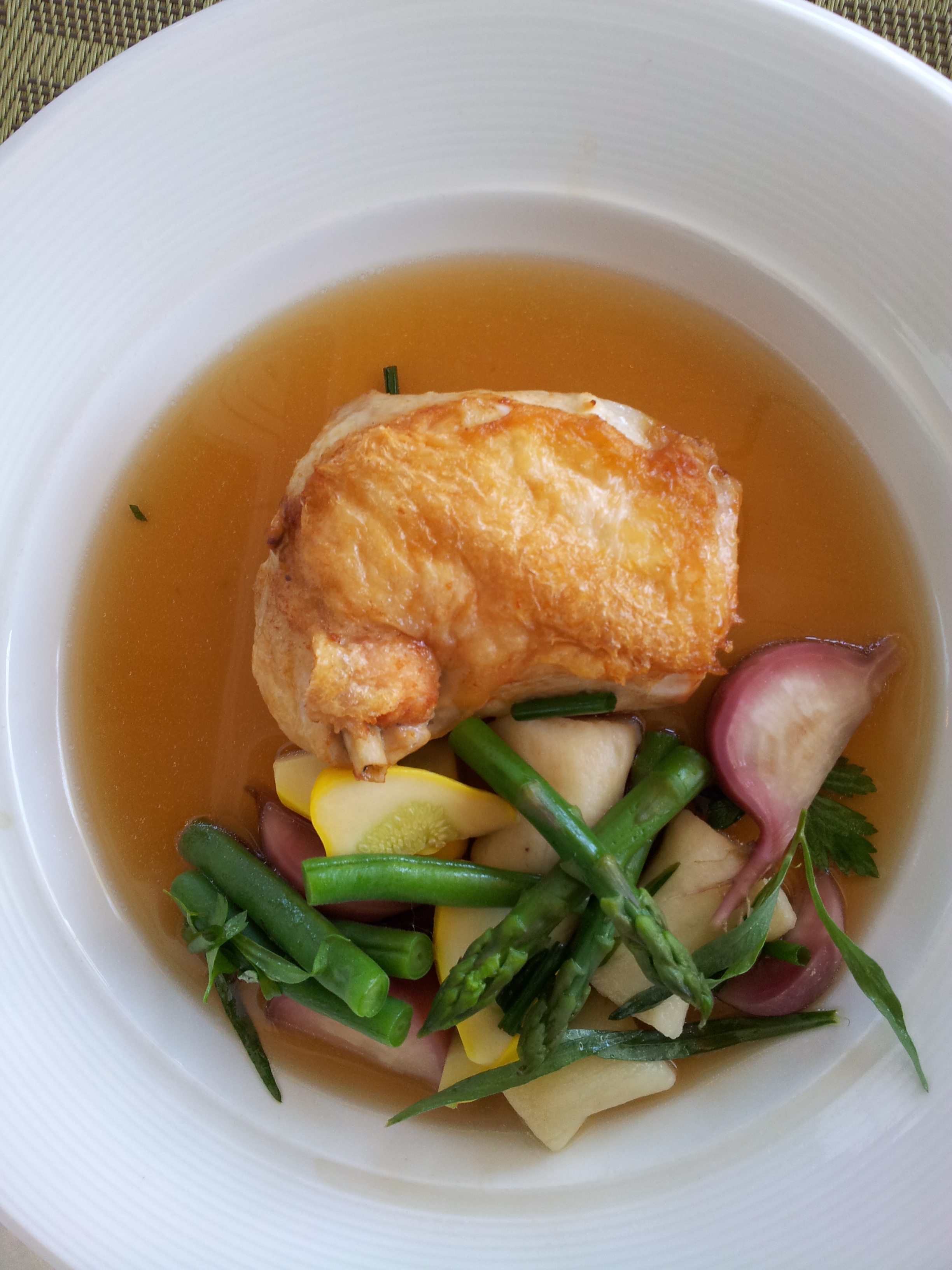
Comfort is the first word Joel Flewelling, chef at Halifax’s Whet Café in Fred Salon, uses to describe savoury pies. “They have never gone out of style,” he says.  “It’s because they’re a comfort food. You connect them to a nice cold winter day. It’s something that heats you up and warms your body. It makes you think of mama.”

Late-season vegetables are ideal for savoury pies, including root vegetables like turnip and carrot. “You can use up a lot of what’s in your fridge,” Flewelling says. “Lots of herbs, leftover peas, celery, onions, green beans. They’re very versatile.”

Five years ago, Flewelling chanced upon an Acadian recipe for the traditional meat pie tourtière. He makes it with savoury meats and spices and a light and flaky crust (see recipe on page 65).  Originally, Acadians made the pie with game birds and would eat it after mass on Christmas Eve. It’s the most requested dish on Flewelling’s winter menu at his trendy Halifax café and people often order entire pies for dinner parties. He says his secret lies in using two kinds of meat—pork and beef.

Pies and their secrets have been with us since ancient times. The Egyptians made a savoury meat pie out of edible crust with straight sides, a bottom and a cover called a “coffin.” They called a pie without a cover a “trap.” The Greeks invented pie pastry for sealing in the juices when cooking meat. The Victorians perfected meat pies as we know them today, though initially they were an economical way of using leftovers from roast dinners. Pies eventually became part of many cultures, including the famous chicken pies of New England and steak-and-kidney pies served in pubs throughout the British Isles.

Leftover meat at the end of the week was the inspiration for Edna Foster’s beef pies. Co-owner of Linden Leas Choice Beef farm in Linden, Nova Scotia, she makes pies using ground beef, chunks of marinated steak and, on occasion, kidney.
Foster loves the simplicity of her pies and never uses recipes, adding only peas, carrots, onions, and a sprinkle of salt and pepper for seasoning.

Savoury pies connect with people on a sentimental level.

“It’s an instant meal for my customers,” she says. “There’s no work involved—they just have to reheat them.” Foster sometimes makes over 200 pies in one week but enjoys it as a fun family activity, with her 10-year-old granddaughter often helping out in the kitchen.

Charlottetown’s John Pritchard takes an inventive approach with his savoury pies. As chef and owner of JP Cuisine, he’s created many different pies over the years, including an adaptation of a Bermudian recipe for Curried Mussel Pie. “Mussels are a standard part of our Island repertoire,” says Pritchard, noting that he fills this pie with potatoes, cream, peas and a thick curry sauce.

You can be as creative with a savoury pie as with a stew or any other one-pot dish.  “You can even juxtapose lowbrow with highbrow,” Pritchard notes. Recently, he made a rich molten chicken pot pie for an upscale event with a seven-course, wine-tasting menu.

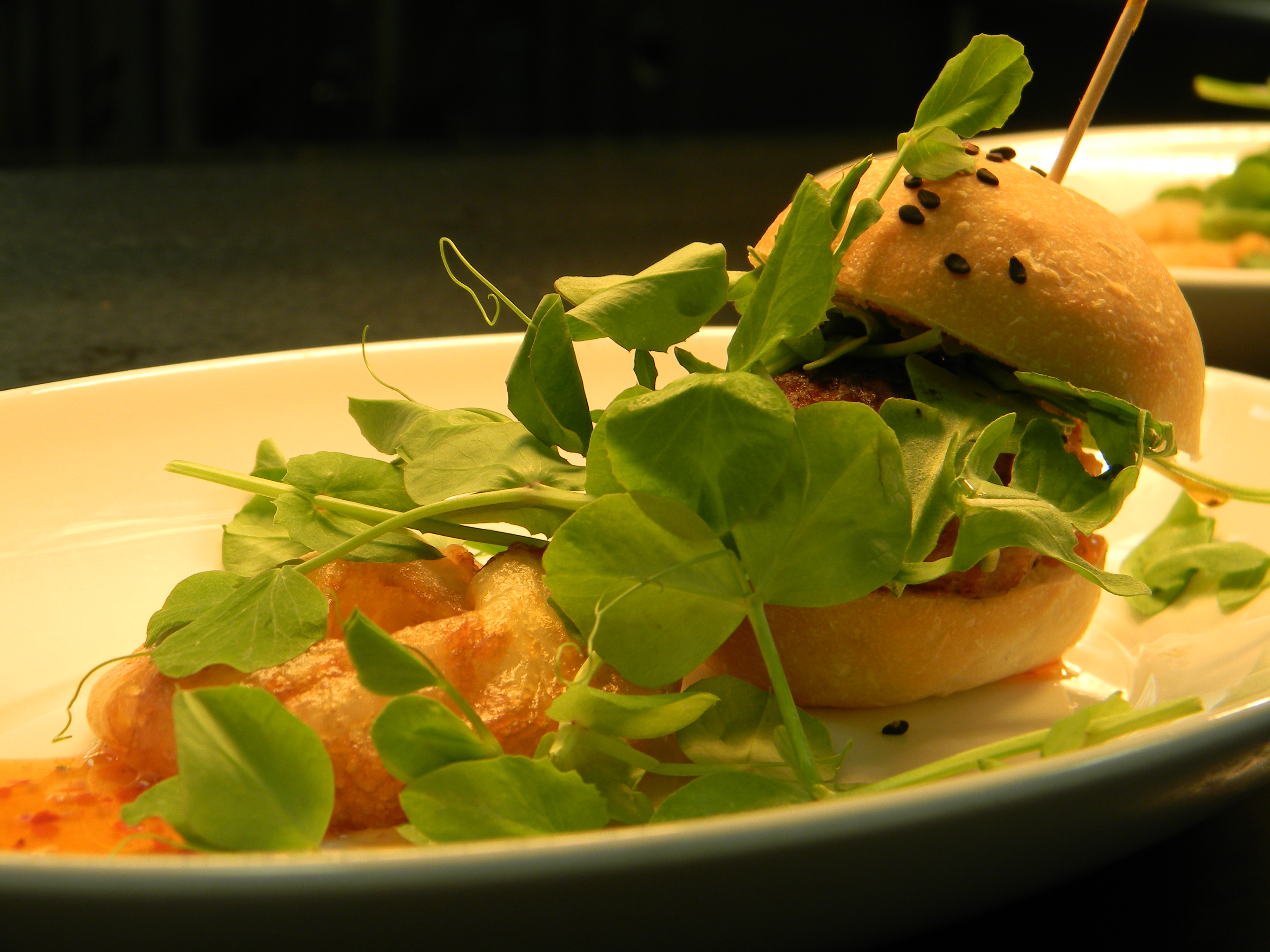
For best presentation, bake savoury pies in individual dishes and garnish them with a sprinkle of fresh herbs. Pritchard suggesting placing little pies on a bed of arugula and serving them with pickled shallots and onions and sauces of aged cheddar or mustard.

Flaky crust is vital for having the perfect pie.

But making pie crust can be intimidating. “Some people are scared of anything that calls for precision,” Pritchard says. “But make it once or twice and you’ve got it down.”

When mixing, the pastry should feel a bit grainy, similar to moist cornmeal. But it’s important not to over-mix. Pritchard recommends squishing the dough in your hand. “If it holds together too well, you’ve added too much butter or liquid and if it doesn’t hold together at all, you haven’t put in enough,” he says. You can also take your pastry to the next level by flavouring it with saffron, curry or herbs such as rosemary and thyme.

For Pritchard like other Atlantic Canadian chefs, pot pies are “warm, stick-to-the-ribs comfort food.” Whether you need to use up the overflowing bounty from your garden or leftovers from a beef or chicken dinner, making a savoury pie is a simple, flavourful option for winter dining.

To view the photo gallery click here.

Recipes featured in this article:

Chicken Pot Pie
Harvest Quiche
Easy Pastry
Le Fred Tourtière
Shepherd’s Pie
Dewolf Ale And Beef Pie
Chipole, Leek And Tofu Quiche

PEI FarmWorks Offers Islanders a Chance to Invest in Island Agri-Enterprises

Islanders will soon have an opportunity to use their investment dollars to grow the province’s number one industry, agriculture and agri-food, right here at home.

PEI FarmWorks is the first investment cooperative set up under the Community Economic Development Business (CEDB) program announced last August by Finance Minister Wes Sheridan.

The CEDB program helps strengthen local communities by offering Islanders a new method to invest in economic development, said Sheridan. “Islanders want to invest in Islanders – in Island businesses that have the potential to benefit the community and foster growth in the local economy,” he said.

Here’s how it works. Investors have the opportunity to put their investment dollars into local Island businesses. In return the Province of Prince Edward Island provides a 35 per cent personal income tax credit, and the investment is RRSP eligible.

“Right now, we are finalizing our constitution and bylaws,” said long time Augustine Cove farmer Elmer MacDonald, who chairs P.E. I. FarmWorks. “We will be kicking off a publicity campaign in the near future to let Islanders know what we are about.”

Phil Ferraro, director of Institute for Bioregional Studies initiated the idea of P.E.I. FarmWorks after learning of the success of a similar investment cooperative in Nova Scotia. Ferraro said that he has attracted a board of directors made up of certified accountants, farmers and social entrepreneurs who will scrutinize business plans to ensure that private investment goes to credible agri-business operations.

David Tingley of the PEI Cooperative Council has been working on behalf of the province to promote CEDBs on Prince Edward Island. He said the program allows Islanders to invest up to $20,000 annually in return for a tax credit of up to $7,000.

According to Ferraro, investing in local businesses is a key to economic prosperity. “We are responding to global trends among consumers to buy local, know your farmers and increase food security.”

“PEI FarmWorks will help support and sustain a new generation of Island agriculture and give Islanders an opportunity to invest in ourselves, said Ferraro. It provides one of the best opportunities we have to harness the strengths of citizens right across the Province to support a culture of economic, social, and environmental sustainability, while at the same time providing significant tax benefits for that support.”

While the concept may be new to this province, MacDonald said it has an enviable record of success in other areas. In Nova Scotia, for example, over $36 million has been invested in over 50 projects since the fund was established, in 1999. “Each year, $90 million dollars leaves Prince Edward Island and goes to investment agencies primarily in central Canada. Just think of what that money could accomplish if we kept it right here at home.”

MacDonald is also the current chair of the PEI ADAPT Council. “During my time on the board I have seen that there is no shortage of innovation and entrepreneurship within the agricultural community on PEI.” He is excited about the program, adding “I fully expect we will have the same kind of success they have enjoyed in Nova Scotia.”

Producing More Food in Nova Scotia

Several of the Directors are traveling widely around Nova Scotia to meet with food producers who have applied, or are interested in applying, for loans from FarmWorks. We are increasing our knowledge of food production while enjoying the people, food, rural and urban amenities and the scenery (at our own expense, needless to say).

It is evident that there is tremendous capacity for food production in this Province, limited primarily by demand. FarmWorks is promoting the message that FOOD GROWS HERE to encourage people to buy more food that’s grown and value-added locally. Whether we’re buying at a farm stand, a farmers’ market, a major retailer or a restaurant, we can choose to buy a little – or a lot – more locally. Putting more of our money into the local economy is a wise investment.

Vermont ‘Farm to Plate’ to Create Jobs and Strengthen Local Food System

Vermont is an example of how state-level legislative support can help regional, mid-sized, and small producers and rural communities. The state has developed polices aimed at community-based agricultural economic development aligned with local and regional food system infrastructure development. In 2009, the Vermont Legislature passed the Farm to Plate (F2P) initiative as part of the state’s jobs bill. Estimates of the F2P plan include 1,500 jobs over the next 10 years based on a five percent increase in food system production and an accompanying annual increase of $88 million in the state’s gross domestic product. Currently, 12.9 percent of private businesses and 16 percent of private jobs in Vermont are in the food and farm sector. In 2007, the state’s agricultural and food output totaled $2.7 billion.

By Marissa Lee / August 11, 2011  http://seedstock.com/2011/08/11/vermont-farm-to-plate-local-food-system/

Interesting video:

Local Food is a Regional Economic Driver

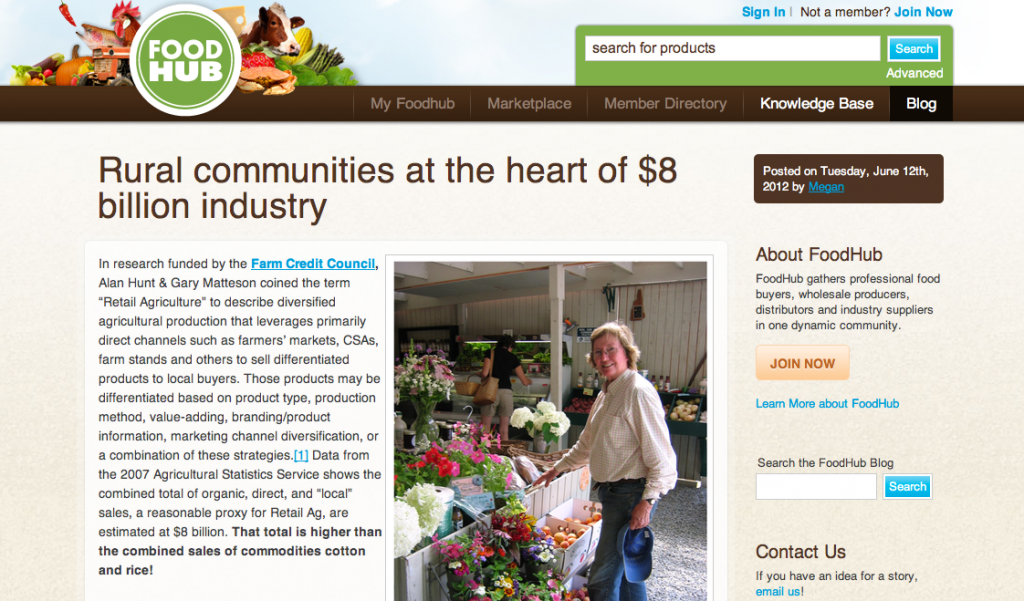
In its 2010 paper, Local Food Systems: Concepts, Impacts and Issues, the USDA cites empirical research that has found that expanding local food systems in a community can increase employment and income in that community[3]. Studies suggest the economic impact of regional food systems are most likely felt in the form of income and employment growth, particularly where import substitution – either of regional food products or of regional food services such as processing – results in more money staying within the region as opposed to being diverted to products or services bought outside the region. Food Hub- Rural Economic Development