Fixing food for the health of Nova Scotia

Fixing food for the health of Nova Scotia

What are we eating? For too many of us, it isn’t Michael Pollan’s prescription: “eat food, not too much, mostly plants”

We’re eating lots of processed foods – highly processed foods – with additives including preservatives, lots of sugar and salt and taste enhancements. These foods are easy to buy and prepare quickly to provide calories. They’re also easy to waste.

Taste buds may accept these foods but our health doesn’t. What we eat can cause obesity and diabetes and heart disease and cancer and overall poor health. And that affects the way we live, work, play, earn – affects our health, determines our future.

There’s good news. When we eat better, we live better.

When we were eating food that was grown, not built to withstand the rigours of a worldwide supply chain; when a tomato was a seasonal delicacy and a potato was stored locally for year-round consumption, rates of food-related illness were much lower. It’s notable that as other countries adopt processed food their illnesses come to mirror those of fast food nations.

We can choose, and eat, and cook our way to better health and a more equitable, sustainable food system. We can find the balance between processed and unprocessed and between locally grown and imported.

Food businesses exist to sell food, which means they follow the trends determined by consumers. If we demand more local vegetables, stores will stock them. If we decrease our consumption of commodity food and buy foods that are grown by people who care about customers and the planet, if we promote policies that encourage local production that supports local economies, if we demand a health care system that fights obesity the way it did tobacco, changes will follow.

Many Nova Scotian farmers and producers are swimming upstream in the global marketplace, not because their food is too expensive, but because many imported foods do not reflect the true cost of production in countries where subsidies permit lower cost of production or where workers may be poorly paid. Loss of income across the food production sector is costing us more than we’re gaining by choosing less expensive food: loss of money that leaves the province to pay for imported food that could be grown here; of employment (many processing plants have closed), of rural residents, of the tax base; of the amenities of the countryside and, importantly, of the entrepreneurial mindset that typifies small and medium size business people who can grow the economy.

But, growing our agricultural and food production sector (farming, transportation, wholesale/retail, processing, preparation) will provide good local food and keep money in the province, thus increasing employment, building social connections and communities, improving individual and the wider determinants of health. These benefits are consistent with the We Choose Now! Directions that follow the One Nova Scotia Report by Ray Ivany et al which noted that “the single most significant impediment to change and renewal is the lack of a shared vision and commitment to economic growth and renewal across our province and among our key institutions and stakeholder communities.”

The 2016 Food Summit on May 28th and 29th at Fountain Commons, Acadia University, sponsored by Friends of Agriculture in Nova Scotia, will address these issues.

We’re pleased you’ve joined us for an informative and inspiring two days of conversations with people who are working to make a difference in the lives of the people who produce and eat food. Sincere thanks to the speakers who are giving generously of their time to help us discover healthy food now and for the future.

Sincere thanks to the Presenters, our Students and FANS Board Members for their ideas and assistance with the Summit.

Linda Best

Chair, Fiends of Agriculture in Nova Scotia
Considering Our Options

“Society broadly needs to change the circumstances for all members of our society to enable people to have options and live differently. In our small province we could actually achieve this.” Dr. John Ross, Chronicle Herald April 1st, 2016
We have options, and not all of them require difficult choices. Many of us worry about challenges while perhaps overlooking local solutions. Dr. Ross describes the Social Determinants of Health which, among others, include income and income distribution; employment and job security; food security; social connections and safety network. 
There are options that can have a positive effect on these determinants. We can choose an apple in place of a candy bar; salad rather than chips; food from fresh rather than a can; walking rather than driving; visiting friends rather than screen time. Choosing to become involved in our communities – rural or urban – is a choice with significant consequences. Buying in our communities – from local businesses – keeps money close to home, creates or maintains employment and helps improve our economy. Learning about options makes it possible to make healthier choices.


Funds for Food – FarmWorks is cultivating food producers

NEWS RELEASE      FarmWorks Investment Co-operative Limited

For Release March 30, 2015

Funds for Food – FarmWorks is cultivating food producers

FarmWorks has reached its first million! A fourth offer of FarmWorks Shares has raised $312,400 from Nova Scotians interested in supporting food producers and growing the Provincial economy. This brings the three year total to $1,033,400 and to date loans have been granted to 34 businesses across the Province. Funds from the new Offer will be loaned to applicants who meet FarmWorks criteria of excellent business planning, and home-grown production and sales.   

FarmWorks Investment Co-operative Limited sells Community Economic Development Investment Fund (CEDIF) Shares to raise capital for strategic and responsible investment in sustainable food production. This capital is loaned to qualifying food-related enterprises that contribute to the Provincial economy by creating jobs on farms and throughout the food system, stimulating the economy, increasing food sufficiency and providing benefits for all Nova Scotians. As loans are repaid the capital is loaned to new applicants.

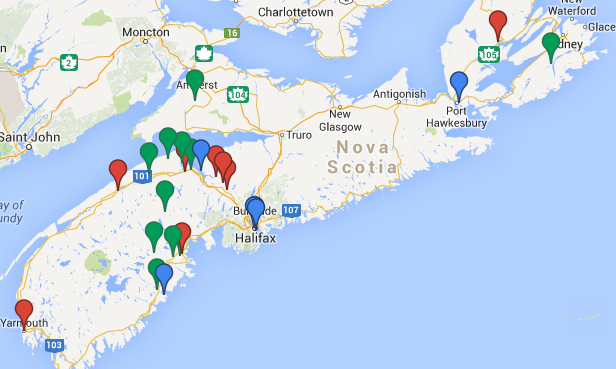
To date the following businesses have received FarmWorks loans: Pie r Squared, Big Spruce Brewing, Kingsville Farm, Fenol Farm, Stewart’s Organic Farm, Oakview Farm, Meander River Farm, Valley Flaxflour, Meadowbrook Meat Market, Charcuterie Ratinaud French Cuisine, Wandering Shepherd Cheese, Rocky Top Farm, Helen B’s Preserves, Savour Deli, Local Source Market, Gold Island Bakery, Vincent Food Dressings, Good Lake Farm, Field Guide Restaurant, Fruition, Hoppy’s Farm, Millennium Gardens, The Port Grocer, Boxing Rock Brewing, Down on the Corner Farm, Flying Apron Cookery, South Shore Farm, Forever Green Farm, Highland Drive Storehouse, Getaway Farm, Rockwell Local No 9, Meadows’ Brother’s Farm, Loré’s Strawberry Farm, Thousand Hills Farm.

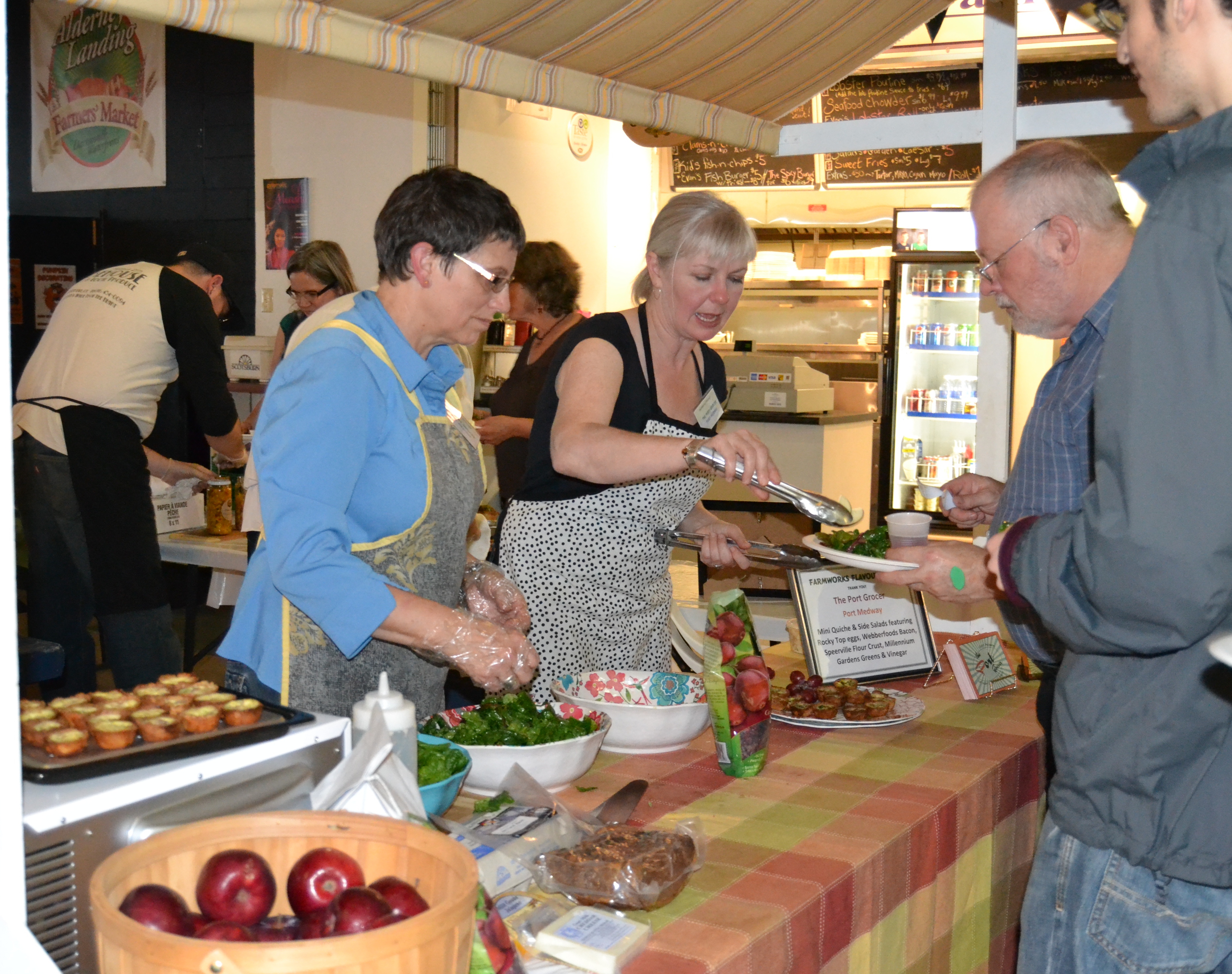
Across the Province FarmWorks hosts Information Sessions for potential investors and Entrepreneurs’ Showcases with “Gentle Dragons” asking questions of entrepreneurs interested in applying for FarmWorks loans. Mentoring and promotion is provided, and annually in October FarmWorks Flavours brings producers together with people who are interested in sampling and learning more about their products.

The fourteen Directors of FarmWorks Investment Co-operative Limited come from across Nova Scotia and, in collaboration with many knowledgeable Advisors, bring expertise in agriculture and food production, economic development, education, health, and business finance and funding decisions.

FarmWorks Share Offers, which require a Certificate of Registration under the Nova Scotia Equity Tax Credit Legislation and non-objection by the Nova Scotia Securities Commission, enable investors who meet the criteria set out in the Legislation to purchase shares in FarmWorks CEDIF and receive a personal 35% non-refundable Nova Scotia Equity Tax Credit. Investors may be eligible for further Tax Credits of 20% and 10% at the 5 and 10 year investment anniversaries. Investments may be eligible for RRSP tax deferral.

FarmWorks Annual General Meeting will take place on April 30th at 3 pm at the Louis Millett Community Centre, Room 119, 9489 Commercial Street, New Minas.  In the same location, at 6 pm the annual April Flavours Dinner sponsored by Friends of Agriculture will feature food and beverages provided and prepared by FarmWorks clients and other food producers. Tickets are $40, are required to be purchased in advance, and are available from Linda Best, various local sources and online (details at https://sandbox.farmworks.ca/fans/)

For more information about this press release contact:

Peter Hicklenton or Linda Best
Co-chairs, FarmWorks Investment Co-operative Limited

Phone: 902-542-3442 or 902-670-3660

lbest@ns.sympatico.ca

Why FarmWorks Matters

PRESS RELEASE – May 26, 2014

More than 25 jobs created within two years by entrepreneurs supported by FarmWorks

FarmWorks Investment Co-operative Limited announced today that 18 Nova Scotian food-related businesses receiving loans in the 18 months between May 2012 and December 2013 have created 20 full time jobs and six part time jobs as a direct result of FarmWorks loans. More …. FarmWorks evaluation report May 2014

July Impact Report Information

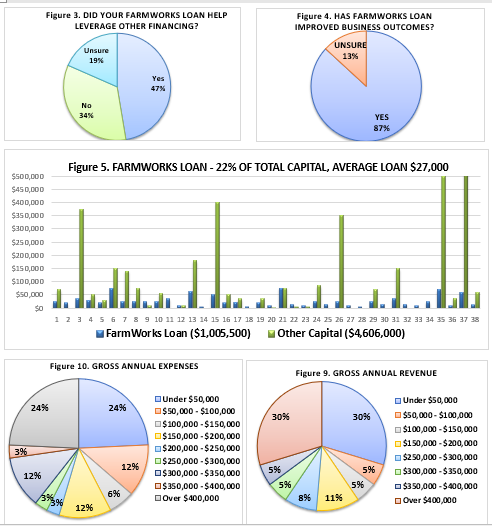
Impacts of Local Investment – Survey of FarmWorks Clients

Economic and Social Impacts of FarmWorks Support for Food Related Businesses in Nova Scotia

Anticipated figures for 2017 based on 70 (relative to 38) businesses that have received $2,078,000 (relative to $1,005,500): revenue $15,000,000, expenses $13,000,000, full or part-time jobs 475.

I think that entrepreneurs should boast about the support that we receive and where we receive it. Too often I see an article on a start-up entrepreneur and they do not mention the support that they received early on, and I think that it is very important that they do, so that others can be aware of it!” FarmWorks client’s comment.

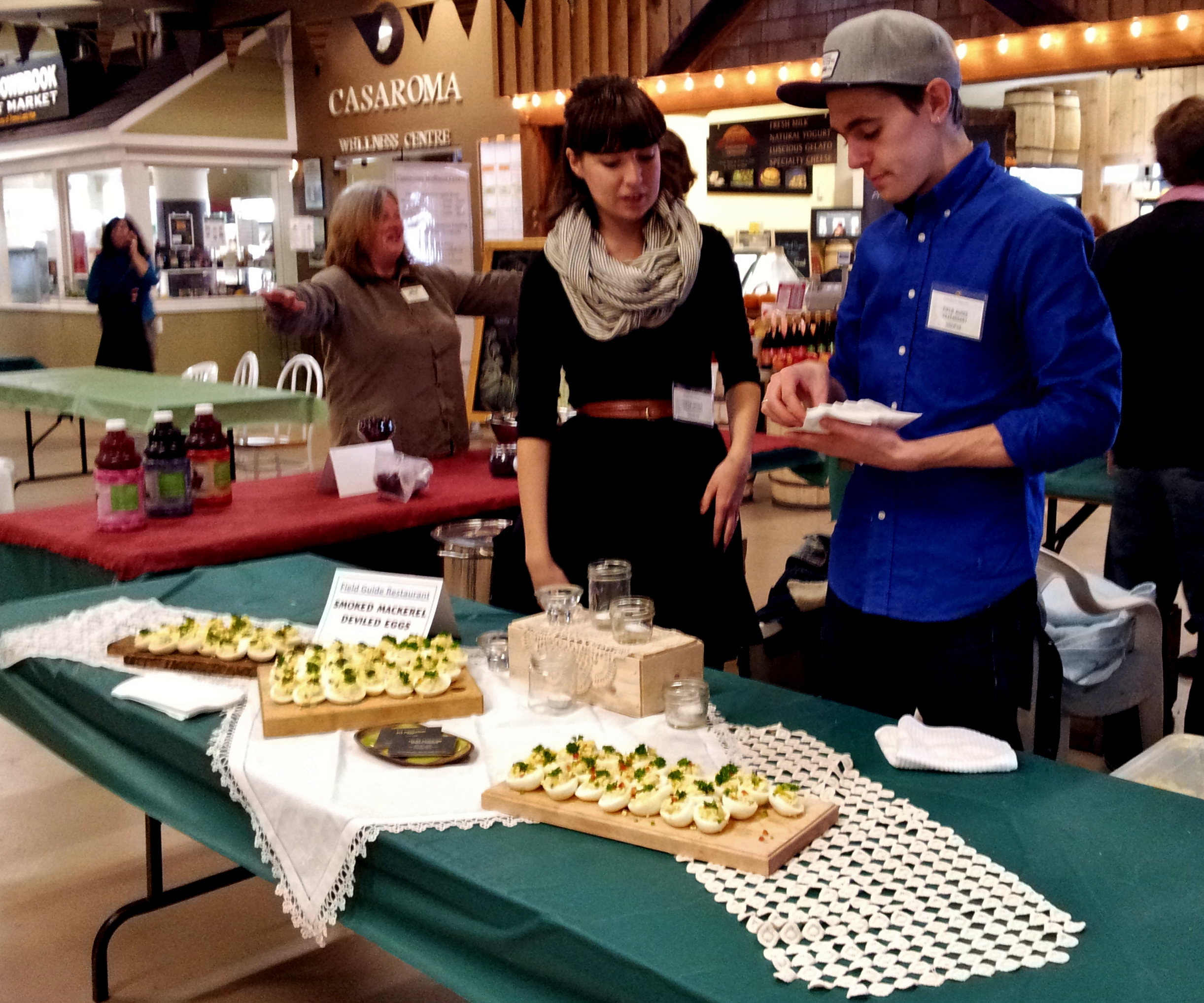
Field Guide

20131027_155705

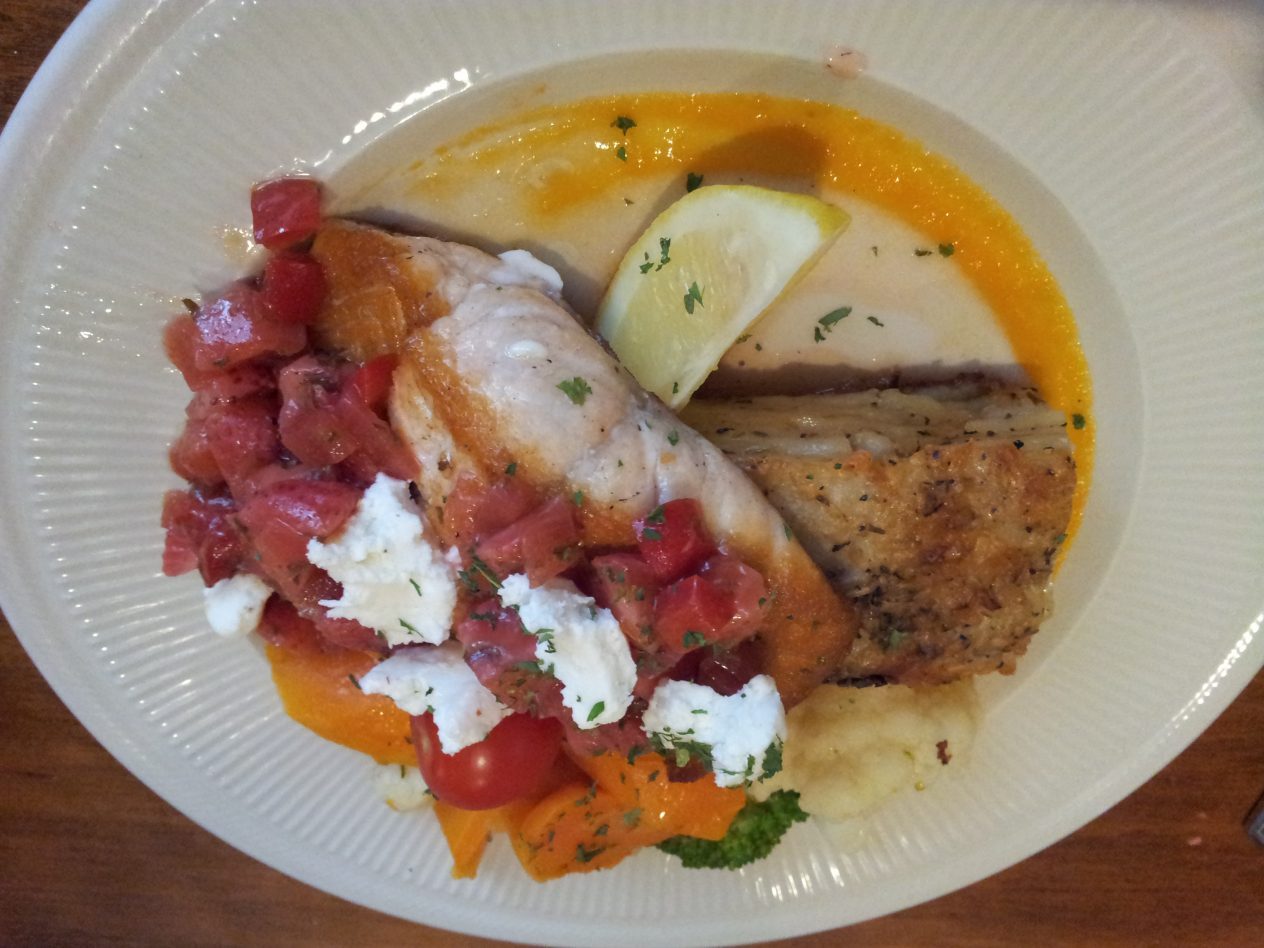
Dan Vorstermans and Ceilidh Sutherland named their new small casual dining space the Field Guide Restaurant, inspired by Peterson Field Guides that Sutherland read while growing up in Tatamagouche. Field Guide is dedicated to bridging the gap between guests and their food through passionate service, an open-concept kitchen and by working with local producers who will be profiled on an ever-changing chalk board menu. Eating locally produced, high quality food makes sense so the menu will be a constant reflection of what is being grown and produced in Nova Scotia. They are creating an atmosphere and great food that will show guests that local products are truly fantastic.


The “Gentle Dragons” are looking for more food

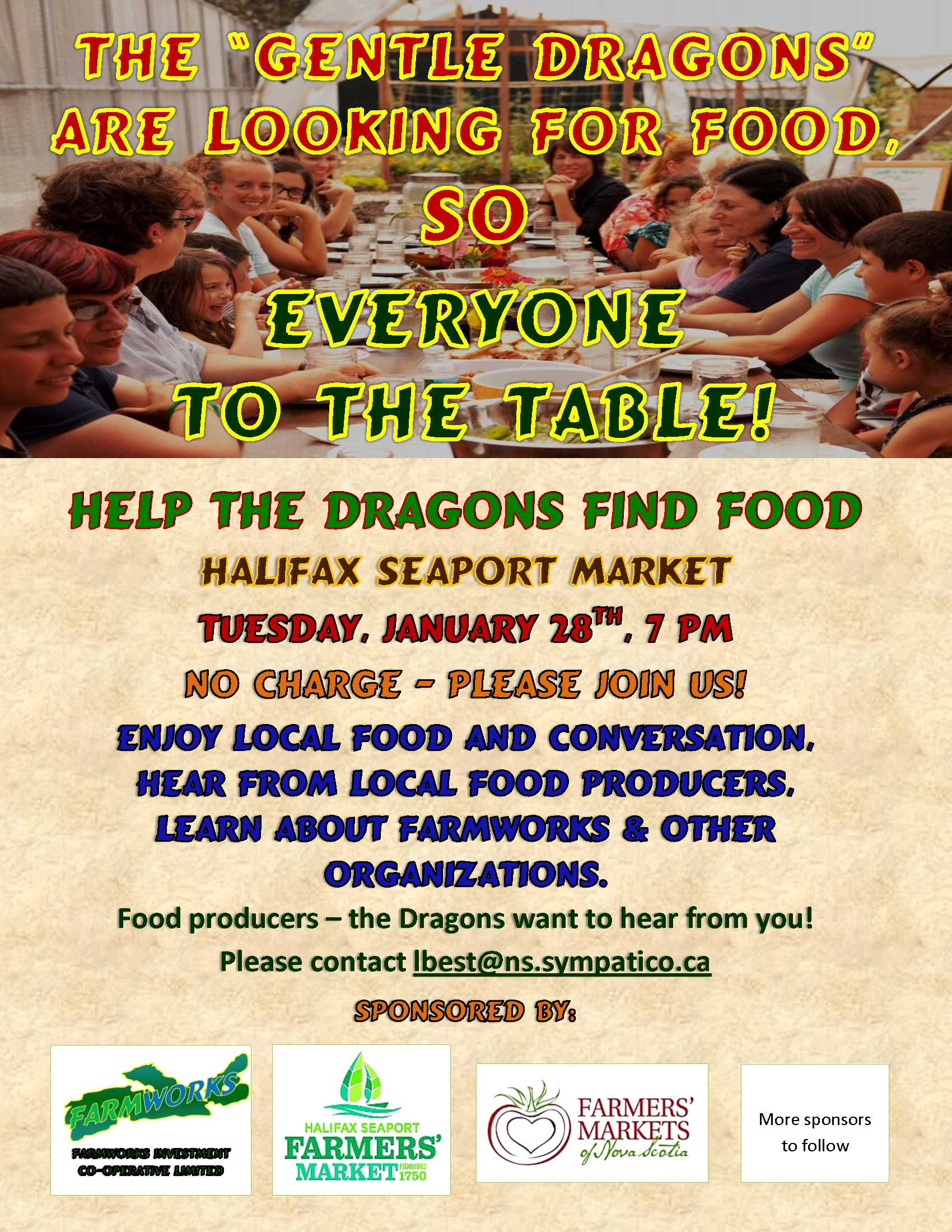
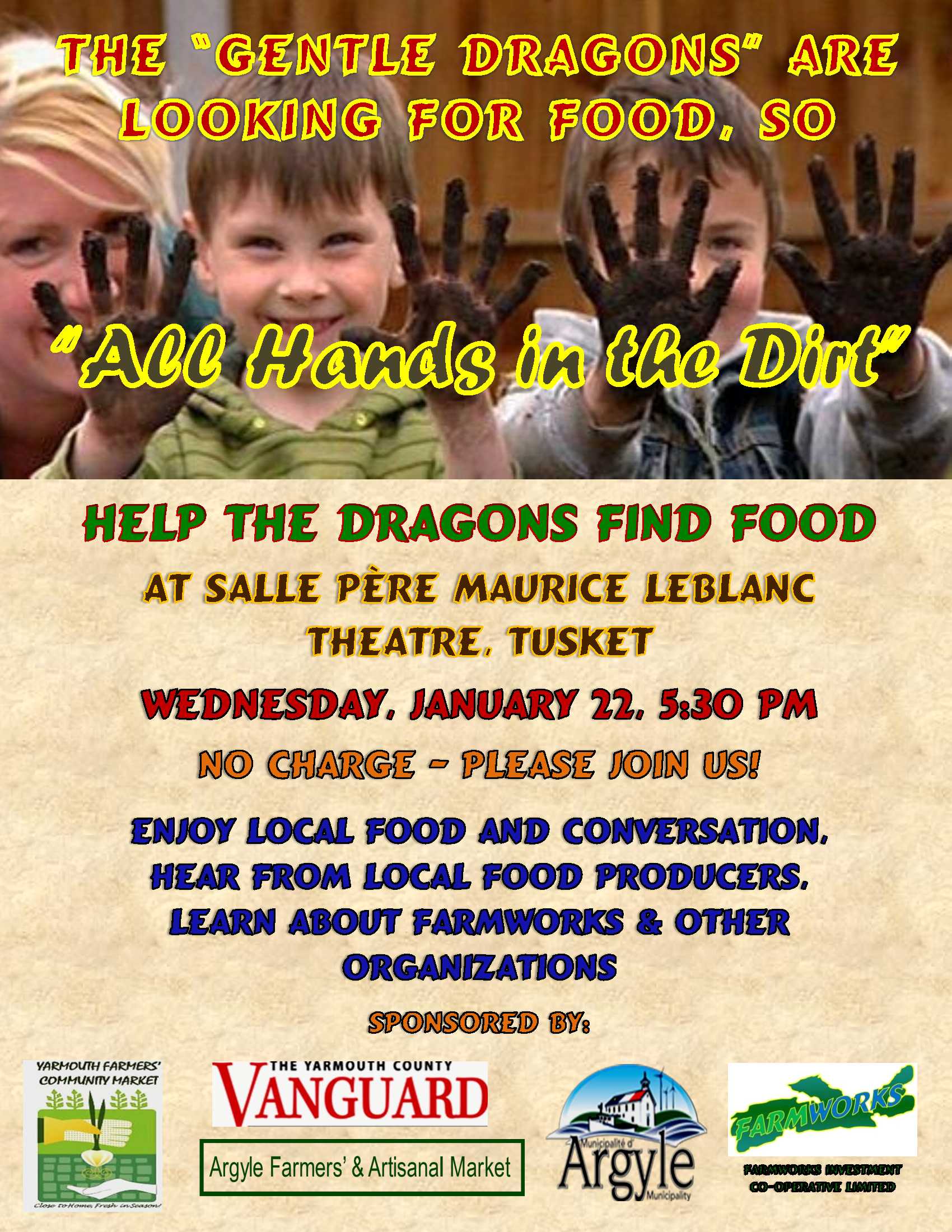
In January and February there will be Entrepreneur Showcases across Nova Scotia. FarmWorks “Gentle Dragons” will ask questions of people who present their plans for producing more food in Nova Scotia, and everyone is invited to attend these sessions to hear about fine people with plans to increase the supply of great Nova Scotian food. Two sessions are already arranged:

Poster  Tusket Jan 22   Seaport DRAFT Everyone to the Table!

“All Hands in the Dirt” Yarmouth

The “Gentle Dragons” are Looking for Food, so  “All Hands in the Dirt”

Help the dragons find food at Salle Père Maurice LeBlanc Theatre, Tusket

Wednesday, January 22, 5:30 pm

No charge – please join us!

Enjoy local food and conversation, 

Hear from local food producers, learn about FarmWorks and other organizations.

Sponsored by FarmWorks Investment Co-operative limited