By Valerie Mansour Winter 2010
There’s nothing like the aroma of a savoury pie wafting from your oven. Whether it’s beef, chicken or vegetable, a two-crust pie or a one-crust quiche, a savoury pie can take away the chill from the coldest winter day.
These pies also connect with people on a sentimental level. “Whose mother, grandmother or father didn’t make chicken pot pie?” asks Heather Lunan, who sells pies at the Farmers’ Market in Wolfville, Nova Scotia. “A lot of Brits come by and they’re so excited to see meat pies around here.”
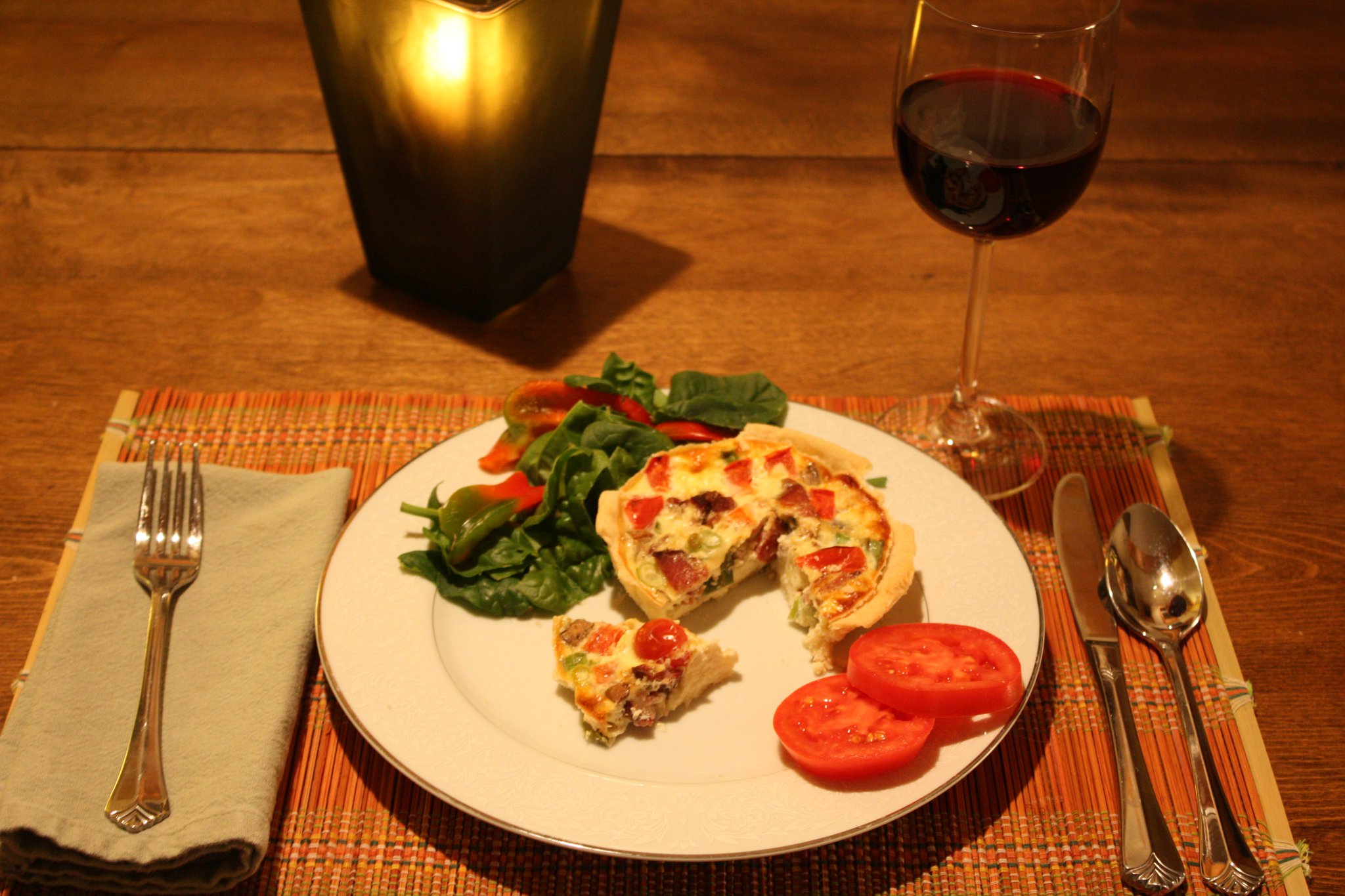
Popular among the delicious offerings she and her husband make for their business, Pie R Squared, are a Harvest Quiche with autumn vegetables, including zucchini and peppers. They don’t pre-cook the vegetables, resulting in a quiche with a crunch. Their DeWolf Beef and Ale pie has a distinct porter flavour that resonates with beer fans. They also create unusual combinations such as a Chipotle, Leek and Tofu quiche with a smoky, hot flavour rounded out with hints of cheddar.
Lunan says pot pies are convenient for people who don’t have time to cook, especially students. While people may prefer quiches in the spring and summer, they desire potpies when the weather turns cooler. “That makes sense because they’re so comforting to eat,” she notes.
Comfort is the first word Joel Flewelling, chef at Halifax’s Whet Café in Fred Salon, uses to describe savoury pies. “They have never gone out of style,” he says. “It’s because they’re a comfort food. You connect them to a nice cold winter day. It’s something that heats you up and warms your body. It makes you think of mama.”
Late-season vegetables are ideal for savoury pies, including root vegetables like turnip and carrot. “You can use up a lot of what’s in your fridge,” Flewelling says. “Lots of herbs, leftover peas, celery, onions, green beans. They’re very versatile.”
Five years ago, Flewelling chanced upon an Acadian recipe for the traditional meat pie tourtière. He makes it with savoury meats and spices and a light and flaky crust (see recipe on page 65). Originally, Acadians made the pie with game birds and would eat it after mass on Christmas Eve. It’s the most requested dish on Flewelling’s winter menu at his trendy Halifax café and people often order entire pies for dinner parties. He says his secret lies in using two kinds of meat—pork and beef.
Pies and their secrets have been with us since ancient times. The Egyptians made a savoury meat pie out of edible crust with straight sides, a bottom and a cover called a “coffin.” They called a pie without a cover a “trap.” The Greeks invented pie pastry for sealing in the juices when cooking meat. The Victorians perfected meat pies as we know them today, though initially they were an economical way of using leftovers from roast dinners. Pies eventually became part of many cultures, including the famous chicken pies of New England and steak-and-kidney pies served in pubs throughout the British Isles.
Leftover meat at the end of the week was the inspiration for Edna Foster’s beef pies. Co-owner of Linden Leas Choice Beef farm in Linden, Nova Scotia, she makes pies using ground beef, chunks of marinated steak and, on occasion, kidney.
Foster loves the simplicity of her pies and never uses recipes, adding only peas, carrots, onions, and a sprinkle of salt and pepper for seasoning.
Savoury pies connect with people on a sentimental level.
“It’s an instant meal for my customers,” she says. “There’s no work involved—they just have to reheat them.” Foster sometimes makes over 200 pies in one week but enjoys it as a fun family activity, with her 10-year-old granddaughter often helping out in the kitchen.
Charlottetown’s John Pritchard takes an inventive approach with his savoury pies. As chef and owner of JP Cuisine, he’s created many different pies over the years, including an adaptation of a Bermudian recipe for Curried Mussel Pie. “Mussels are a standard part of our Island repertoire,” says Pritchard, noting that he fills this pie with potatoes, cream, peas and a thick curry sauce.
You can be as creative with a savoury pie as with a stew or any other one-pot dish. “You can even juxtapose lowbrow with highbrow,” Pritchard notes. Recently, he made a rich molten chicken pot pie for an upscale event with a seven-course, wine-tasting menu.
For best presentation, bake savoury pies in individual dishes and garnish them with a sprinkle of fresh herbs. Pritchard suggesting placing little pies on a bed of arugula and serving them with pickled shallots and onions and sauces of aged cheddar or mustard.
Flaky crust is vital for having the perfect pie.
But making pie crust can be intimidating. “Some people are scared of anything that calls for precision,” Pritchard says. “But make it once or twice and you’ve got it down.”
When mixing, the pastry should feel a bit grainy, similar to moist cornmeal. But it’s important not to over-mix. Pritchard recommends squishing the dough in your hand. “If it holds together too well, you’ve added too much butter or liquid and if it doesn’t hold together at all, you haven’t put in enough,” he says. You can also take your pastry to the next level by flavouring it with saffron, curry or herbs such as rosemary and thyme.
For Pritchard like other Atlantic Canadian chefs, pot pies are “warm, stick-to-the-ribs comfort food.” Whether you need to use up the overflowing bounty from your garden or leftovers from a beef or chicken dinner, making a savoury pie is a simple, flavourful option for winter dining.
To view the photo gallery click here.
Recipes featured in this article:
Chicken Pot Pie
Harvest Quiche
Easy Pastry
Le Fred Tourtière
Shepherd’s Pie
Dewolf Ale And Beef Pie
Chipole, Leek And Tofu Quiche